
Sarvam AI, an Indian full-stack sovereign artificial intelligence company, has achieved unicorn status after raising $234 million in a Series B funding round led by HCLTech and Bessemer Venture Partners, with HCLTech acquiring a 10.46 per cent stake.

Indian startup funding plummeted by 43 per cent year-on-year to $7.81 billion between March 1 and June 15, 2026, largely due to the West Asia conflict, which has amplified global risk perceptions, tightened liquidity, and led to rupee depreciation, making global investors cautious.

'More than becoming a unicorn, what truly satisfies us is seeing small businesses grow from Rs 10,000 a month to Rs 20 lakh after joining our platform.'

Netrasemi, an Indian semiconductor start-up, has announced that its flagship AI chipset, A2000, has achieved silicon bringup and is preparing for commercial production this year. The A2000 SoC, supported by Zoho and the government's DLI programme, will enable smart vision and real-time video analytics for smart cameras and edge AI platforms.
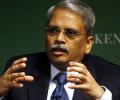
Infosys co-founder Kris Gopalakrishnan urges Indian startups to focus on deep technology and advanced manufacturing to ensure strategic autonomy.

Former England cricketer Liam Plunkett swapped his cricket colours for a baseball glove on Friday, playing his first game for independent American club Oakland Ballers and even claiming a strikeout.

The Competition Commission of India (CCI) has approved the acquisition of a stake in AI acceleration cloud provider Neysa Networks by Blackstone-backed private equity funds and other investors, following Neysa's announcement of a USD 1.2 billion capital raise.

Deep-tech now forms over half of VC portfolios in India as firms like Cornerstone, Unicorn India Ventures and All in Capital back startups combining research with scalable models

Ed-tech unicorn PhysicsWallah is strategically targeting a 30% revenue improvement by FY27, leveraging AI-led automation, aggressive expansion into southern Indian markets, and a strong focus on student learning outcomes and enrolment growth.

Country's startups are carving a unique path by prioritising local, application-led innovation over the global pursuit of scale.

Startups that became unicorns in 2024 took an average of nine years and six months to reach $1 billion valuation, reflecting the impact of a prolonged funding squeeze from PE/VC firms over the past few years.

Since then, 129 startups have joined this star status, of which 100 were added from January 2019, generating a total value of $535 billion. Entrepreneurs are building bigger enterprises at a faster rate -- 50 per cent of the 130 companies reached unicorn status in the first five years after their initial institutional fundraising.

Indian startups raised a total of $1.65 billion (about Rs 14,418 crore) in funding at a median valuation of $83.2 million in February 2025, according to data from Traxcn. This brings the total funding in FY25 (April-February) to $25.4 billion, spread across 2,200 rounds, the data showed.
The Indian startup ecosystem recently celebrated the 100th unicorn milestone. It came after a month of no big fund announcements. Compare this to 2021, when three to four unicorns were being added every month. Nevertheless, the 100th unicorn needs to be celebrated since the first unicorn was announced in 2011 - 11 years ago.

India is currently home to 52 unicorn startups and one of the fastest-growing startup ecosystems.

'Given that the market is now demanding disciplined growth, well-run companies should be able to demonstrate profitability with the cash on hand.'
That's because India does not have a serious venture capital industry with an appetite for risk, observes T N Ninan.

A student allegedly threatened a PhysicsWallah teacher with a slipper during an online class in 2023 -- one of the several safety-related incidents revealed by the edtech unicorn in its updated draft papers filed ahead of its initial public offering (IPO).

India may get its first unicorn this year as Zepto, which promises 10-minute deliveries, is in talks to get fresh funding that would take the start-up's valuation past $1 billion. The quick-delivery firm is looking to raise $150 million in a series E round, which will take its valuation to $1.3 billion. The round will be led by StepStone Group, a limited partner (LP) of Zepto's existing investor, Nexus Venture Partners, said media reports.

India has 50 startups with the potential to achieve the coveted 'unicorn' status in 2022 and by the end of the year, the list of the new-age companies valued at over $1 billion will be at least 100, a report by a consultancy firm said on Monday. In 2021, which witnessed a huge spike in company valuations in the listed and unlisted space driven by ample liquidity, according to some watchers, India added 43 startups to the list and the number of unicorns shot up to 68 by the end of the year. Over $10 billion was invested in the Indian startup ecosystem in the October-December quarter alone, according to the report by PwC India.
India added three 'unicorns' per month in 2021 to nearly double the overall number of startups valued at over USD 1 billion to 51 as of end-August, a report said on Thursday. Even as, cumbersome regulations are forcing startups to leave India and settle in other countries where they enjoy better treatment, as per the Hurun India, which prepared the list. It can be noted that over the last few years, dedicated efforts have been undertaken to hone the startups ecosystem by the government through flagship initiatives like 'Startup India'.

'First, develop the ability to sell -- to persuade, negotiate and close. Second, understand the financial mechanics that determine where value pools and how profits are captured,' says Shaadi.com founder Anupam Mittal.
The Indian economy has witnessed the creation of 28 unicorns, or startups valued over $1 billion, this year on the back of a series of reforms unleashed by the government, Finance Minister Nirmala Sitharaman said. Addressing a virtual conference organised by the Indian Private Equity and Venture Capital Association (IVCA), the minister said the Indian economy has witnessed a spur of unprecedented growth in the form of startups in the last two decades. The Department for Promotion of Industry and Internal Trade (DPIIT) has recognised more than 56,630 startups across districts throughout India, IVCA said in a statement quoting the finance minister.
$47.6 bn capital invested across 921 deals in India in 2020, despite pandemic.

Over the last 12 months, thanks to bold bets by venture capital firms like Sequoia, SoftBank Vision Fund, and foreign strategic investors like Naspers, pipeline of start-ups with potential to achieve $1 bn in valuation is at an all-time high.

Whether in cricket or business, Kohli continues to play the long game.

India's share of total global venture capital (VC) funding fell to 2.9 per cent in calendar year 2023 (CY23) - the lowest since CY19 - reaching $7.3 billion as most startups struggled to raise money without compromising on their earlier valuations. Based on global data by CB Insights on VC funding, funding to Indian startups fell by nearly a third compared to CY22 when it hit $20.6 billion and accounted for 4.8 per cent of the global figure. While the data shows that the world had 71 new unicorns (21 in Asia), India contributed only two of them, as compared with CY22 when it had 22.

The move comes barely a week after fellow crypto unicorn CoinDCX laid off 12 per cent of its workforce - an estimated 80 employees - amid challenging macroeconomic conditions and regulatory uncertainty in the sector. CoinSwitch has 519 employees, according to its LinkedIn profile. This means around 8 per cent of its workforce were shown the door.
These unicorns, or startups valued at over USD 1 billion, are across industries, beyond technology and tech-enabled sectors as well, like pharmaceuticals, and consumer goods, Credit Suisse India equity strategist Neelkanth Mishra told reporters in Mumbai.

Becoming a unicorn is surely a marker for a company in its growth story, but it's not a major achievement nor is it a turning point of any significant worth.

Dubai is positioning itself as a springboard for Indian companies looking to tap into fast-growing emerging markets, including Africa, banking on low tariffs, long-standing trade relations, and a shared vision for regional economic growth, said Mohammad Ali Rashid Lootah, president and chief executive officer, Dubai Chambers, at the Dubai-India Business Forum in Mumbai.

'It is our duty to keep space sustainable and free of debris.'

Ajit Balakrishnan on keeping an eye on democratising finance in India.
Byju's, Flipkart, PharmEasy and CRED, among others, have taken the acquisition route to grow
There seems to be no dearth of funds to fuel this growth, report Peerzada Abrar and Shivani Shinde.

Co-founders of India's latest unicorn expected Covid-19 to be a speed breaker; instead it accelerated sales. Cars24 now enjoys more than 90 per cent market share among all other similar online transaction platforms. Dhruv Munjal traces the birth of this used-cars platform.

A large part of the work that CEO Sumit Gupta does is focused on educating users and the larger community about investing in cryptocurrencies, reports Neha Alawadhi.
Anmol Singh Jaggi and Puneet Singh Jaggi, once hailed as rising stars in India's clean energy sector, are now facing serious regulatory action.

For the startup ecosystem in India, the scorecard so far has been a mixed bag, observes Akhil Gupta.

Byju's has emerged as the leader in the Indian education-tech sector. They are pioneering technology shaping the future of learning for millions of school students in India.
